
VA Claim Denied for No Nexus: Your Guide to Winning the Appeal
Getting a denial letter from the VA is frustrating, but a “no nexus” finding is actually one of the most “fixable” problems in the system. It simply means there is a missing link in your paperwork. In 2026, with the VA using more automated systems to process claims, these “technical” denials are more common than ever.
The good news is that a “no nexus” denial is not a rejection of your service or your pain. It is a request for better evidence. This guide will show you exactly how to build that bridge and turn that “No” into a “Yes.”
What Does “No Nexus” Actually Mean?
To the VA, a “nexus” is a connection between your condition and your service. To win any disability claim, you must prove three things:
- A Current Diagnosis: A doctor says you have a condition right now.
- An In-Service Event: Something happened during your military service (an injury, an exposure, or an event).
- The Nexus: A medical expert explains how #1 was caused by #2.
If you were denied for “no nexus,” the VA is saying, “We see you are sick, and we see you served, but we don’t see how they are related.” This often happens because the VA doctor (C&P examiner) gave a “negative opinion,” or because your private medical records didn’t use the specific legal language the VA looks for.

The “Secret” Language of the VA: The 50% Standard
One of the biggest mistakes veterans make is thinking they have to prove their case beyond a shadow of a doubt. You don’t. Under 38 C.F.R. § 3.102, the VA must give you the “Benefit of the Doubt.”
In the legal world, we use the phrase “at least as likely as not.” This means there is at least a 50% chance your condition is related to your service. If a doctor says it is “at least as likely as not,” the VA is legally required to rule in your favor.
The VA Nexus Language Explained
| Term | Meaning | Why it Matters |
| Nexus | Medical link between service and condition | Required for service connection |
| “At least as likely as not” | 50% or greater probability | Legal standard VA must apply |
| Reasons and Bases | VA’s written explanation | Identifies how to fix the denial |
| C-File | VA’s internal claim record | Shows what evidence VA reviewed |
| Medical Opinion | Doctor’s written analysis | Can establish nexus if properly worded |
Understanding this terminology is the first step in correcting a no-nexus denial.
How to Get a Winning Nexus Letter
If you’ve been denied, the single most powerful tool in your arsenal is a Medical Nexus Letter. This is a letter from a doctor that acts as the “expert witness” for your claim.
A “simple” letter from your family doctor saying “I think this is from the military” is usually not enough. In 2026, VA raters are trained to look for a “Clinical Rationale.” This means the doctor must explain why they think the condition is linked. They should cite medical studies or your specific service records (your C-File) to back up their opinion.
Expert Tip: Ensure your doctor uses the exact phrase: “It is my professional opinion that it is at least as likely as not that [Veteran’s Name]’s condition was caused or aggravated by their military service.”

Why C&P Exams Often Fail Veterans
Most “no nexus” denials are based on a 15-minute Compensation & Pension (C&P) exam. These examiners are often overworked and may not have reviewed your entire medical history.
If your denial was based on a “bad” C&P exam, you have the right to challenge it. You can do this by:
- Pointing out errors: Did the examiner say you never complained about your back in service, even though your records show you did?
- Challenging qualifications: Was a general practitioner giving an opinion on a complex neurological issue?
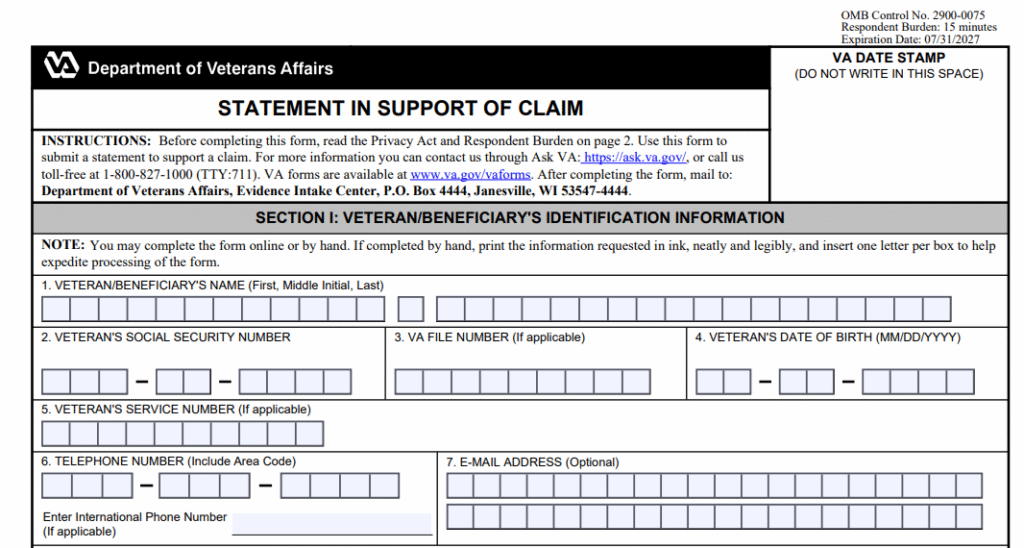
- Submitting a Rebuttal: You can submit a statement (VA Form 21-4138) explaining exactly what the examiner got wrong or missed during the appointment.
Choosing Your 2026 Appeal Path
Under the current VA rules, you have three main ways to fight a “no nexus” denial. Choosing the right one is the difference between winning in months or waiting for years.
- The Supplemental Claim (The “New Evidence” Lane)
This is usually the best choice for a “no nexus” denial. If the VA said you didn’t have a link, you need to add a link. By submitting a new Nexus Letter or new medical records as “New and Relevant Evidence,” you trigger a fresh review of your claim.
Best for: When you have a new doctor’s letter to submit.
- Higher-Level Review (The “You Missed Something” Lane)
In a Higher-Level Review (HLR), you are telling the VA, “The evidence for a nexus was already in my file, but the rater missed it.” You cannot submit new evidence in this lane. Instead, a senior rater looks at your file to see if a mistake was made.
Best for: When the VA ignored a Nexus Letter you already submitted.
- Board of Veterans’ Appeals (The “Long Haul” Lane)
This takes your case to a Veterans Law Judge in Washington, D.C. It can take years, but it is often the best place for very complex medical arguments that local VA offices don’t understand.
Best for: When the local office keeps denying you despite strong evidence.
Using Buddy Statements to Fill the Gaps
Sometimes medical records are missing. Maybe you were in combat and didn’t go to “sick call,” or maybe your records were lost in the 1973 fire. This is where Buddy Statements (Lay Evidence) come in.
A letter from someone you served with, your spouse, or even a roommate can help establish that your symptoms started in the military. While a “buddy” cannot give a medical opinion, they can testify to what they saw. For example, a buddy can say, “I saw him fall off the truck in 2004, and he limped for the rest of the deployment.” This provides the “event” that your doctor can then use to write a Nexus Letter.
Step-by-Step: What to Do Right Now
If you are looking at a denial letter today, follow these steps:
- Read the “Reasons for Decision”: Look for exactly what the VA says is missing. Did they say there was “no evidence of an in-service event”? Or did they say “the medical evidence does not show a link”?
- Request your C-File: This is your entire VA record. You need to see what the C&P examiner actually wrote about you.
- Talk to a Specialist: Find a doctor who understands VA law and is willing to review your records to write a Nexus Letter.
- Watch the Clock: You have 365 days from the date on your letter. If you miss this, you might lose your “effective date,” which means losing thousands of dollars in back pay.
The VA system is designed to be “veteran-friendly,” but “no nexus” denials make it feel like an uphill battle. Remember that you are not alone. Over half of all initial claims are denied. By focusing on the medical link and using the “At least as likely as not” standard, you can turn a technical denial into a lifelong benefit.
If you are tired of the “hamster wheel” of denials, our team at Outreach Legal can help you review your denial letter and find the best path forward. Don’t let a “No” be the final answer for the benefits you earned.